
Automate This! Our Top Picks for Process Automation Software
What is Automation Software and Why Does Your Business Need It?
Automation software solutions are applications that handle repetitive tasks with minimal human input, turning manual processes into automated workflows that run 24/7. Here are the top types to consider for your business:
Most Popular Automation Categories:
Workflow Automation - Connects apps and automates multi-step processes.
Robotic Process Automation (RPA) - Software bots that mimic human actions on a computer.
Task Automation - Handles specific recurring tasks within project management tools.
Integration Platforms - Sync data between different software systems.
AI-Powered Solutions - Smart automation with machine learning capabilities.
If you're a small business owner drowning in repetitive tasks, you're not alone. As one healthcare professional put it: "When you can fill out a form with the click of one button, or your computer fills out a form for you based on the name you put in, this is an example of automation."
The reality is simple: automation leaves the menial jobs to computers while freeing up your time for strategic work that actually grows your business. Whether it's automatically responding to customer inquiries, processing invoices, or managing your social media posts, these tools can eliminate hours of busywork every week.
From basic task schedulers to AI-powered digital workers, automation software has evolved to help businesses of all sizes improve accuracy, boost productivity, and reduce costs. Many modern solutions require zero coding knowledge and can be set up in minutes.
I'm Joey Martin, founder of WySMart.ai, and I've spent years helping small business owners implement automation software solutions that actually move the needle. After watching countless entrepreneurs struggle with manual processes that drain their time and energy, I've seen how the right automation tools can transform a business from survival mode to growth mode.
When we talk about automation software, we're really talking about a shift in how businesses operate. It's not just about delegating tasks; it's about optimizing your entire Business Process Management (BPM). This digital change means moving away from employees tirelessly keying in the same data across multiple systems to a new era where intelligent systems handle these repetitive, time-consuming chores.
Imagine your team focusing on innovation and customer relationships instead of getting bogged down in administrative minutiae. That's the promise of automation software solutions. They lead to increased productivity, significant error reduction, and a higher level of quality through precision.
Core Benefits of Automation Software Solutions
The benefits of embracing automation software solutions are far-reaching, impacting almost every facet of your business. Let's explore some of the most crucial ones:
Efficiency: Workflow automation software puts an end to time-draining repetitive tasks by creating predefined rules and sequences that streamline processes.
Accuracy: Automating processes ensures a level of accuracy that is difficult for humans to maintain consistently, guaranteeing better quality outputs.
Productivity: When repetitive tasks are automated, employees have more time for strategic or creative activities, increasing overall productivity.
Cost Savings: Automating processes leads to substantial cost reductions through higher accuracy, faster production cycles, and improved ROI. Top performers have seen an 8.5x ROI on their automation programs.
Compliance: Automation software can help ensure your business operations adhere to industry-specific regulations through consistent, automated task execution.
Scalability: As your business grows, automation software scales with it. This inherent scalability makes it a cost-effective solution for growth.
Improved Employee Satisfaction: Automating tedious tasks frees employees to focus on more engaging and strategic work, which directly improves morale and satisfaction.
Improved Customer Experience: Faster, more accurate service translates directly into happier customers. Automation provides quicker, top-tier services with fewer mistakes.
Common Examples in Daily Operations
You might be wondering, "Where does this magic happen in my daily business?" The truth is, automation software solutions are already weaving their way into countless aspects of everyday operations.
Here are some common examples:
Automated Email Marketing: Sending personalized and segmented emails based on customer behavior without manual oversight.
AI-powered Customer Service Assistants: Chatbots handle initial queries and FAQs, freeing human agents for more complex issues.
Data Entry Automation: Software bots handle data entry, processing, and mining, which is especially useful in data-heavy sectors like insurance.
Automated Report Generation: Software can pull data from various sources to automatically compile weekly sales reports or monthly financial summaries.
Social Media Scheduling: Tools that let you plan and schedule social media posts in advance ensure a consistent online presence.
Invoice Processing: Automation can streamline the entire accounts payable process, from receiving invoices to initiating payments. Johnson Controls, for instance, saved $18 million by automating 6,500 daily invoices.
Employee Onboarding Workflows: HR departments can automate sending welcome emails, distributing forms, and scheduling training for new hires.
Top Categories of Automation Software to Consider
Now that we've explored the potential of automation software solutions, let's dive into the different types. Understanding these categories will help you identify the right tools for your specific business needs.
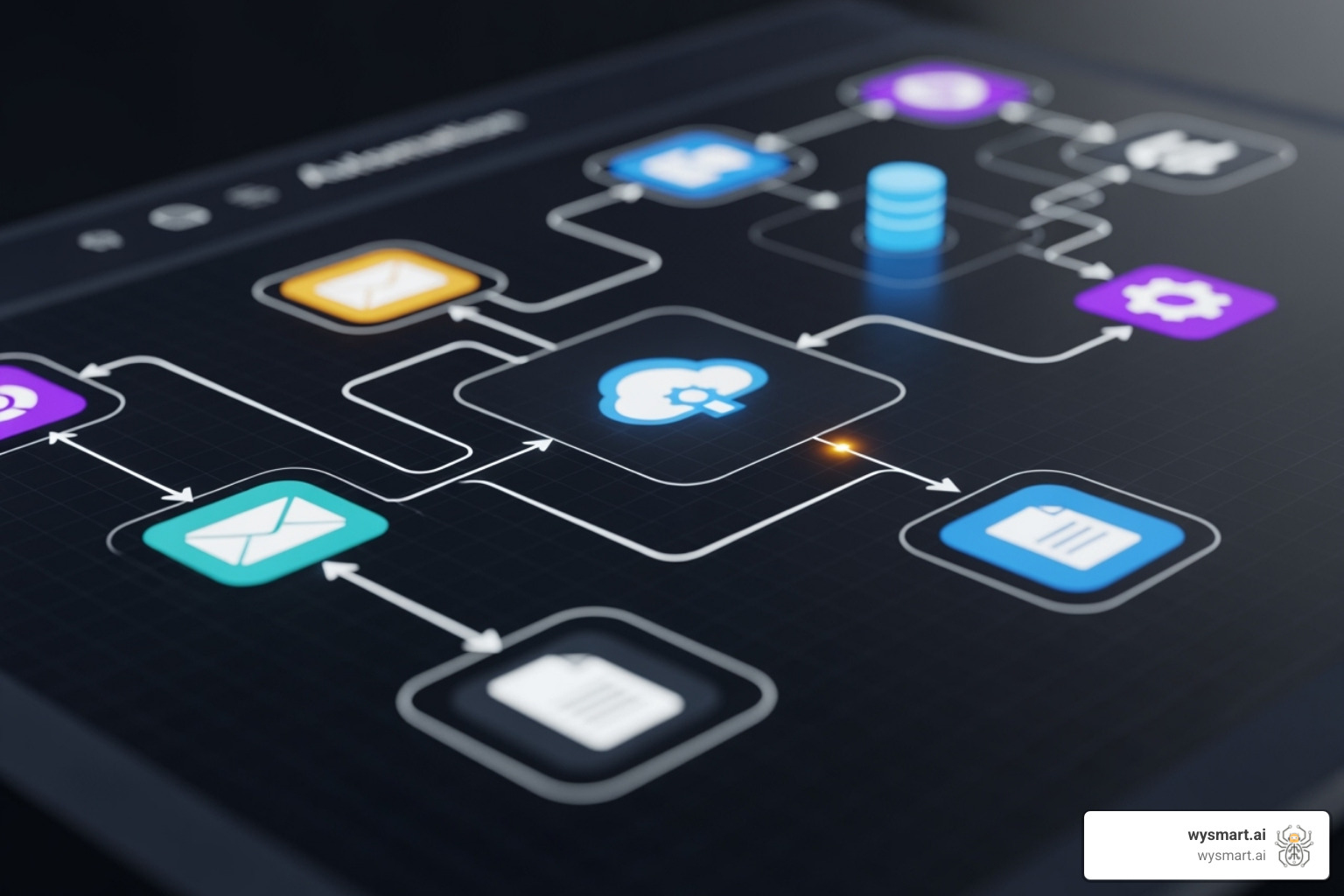
At a high level, most automation software solutions fall into several main categories: workflow automation handles sequences of tasks, process automation manages entire business processes, and task automation tackles specific recurring activities. Many modern platforms, especially those powered by AI, combine features from multiple categories.
What makes today's automation landscape so accessible is the rise of no-code platforms. These tools let you build sophisticated automated workflows without writing a single line of code, often using a simple drag-and-drop interface.
Workflow and Process Automation Platforms
Workflow and process automation platforms act as a super-organized project manager that never sleeps. They guide work smoothly from one step to the next using predefined rules and sequential tasks.
These platforms excel at task management and fostering cross-functional collaboration. They are particularly effective for improving Agile workflows by reducing manual handoffs and freeing up time for more valuable work.
Common use cases include:
Approvals: Automatically routing expense reports, vacation requests, or content for approval.
Content Publishing: Ensuring content moves through drafting, editing, and review without falling through the cracks.
Customer Support: Routing tickets to the right team member based on the issue type.
Onboarding: Handling all the tedious setup steps for new employees or customers.
Claims Processing: Automating the intake, data extraction, and routing of insurance claims to cut down processing times.
Robotic Process Automation (RPA)
Robotic Process Automation, or RPA, is like having a digital employee who can work 24/7. These software bots mimic human actions—clicking, typing, and navigating applications—at high speed and with perfect accuracy.
RPA is system-agnostic, meaning it can work with almost any application, from modern web apps to legacy systems. Desktop automation (RDA) brings this power to an individual's computer, where a bot can organize files or handle routine data entry.
Many RPA tools don't require coding knowledge; you can often record yourself performing a task, and the bot will learn to repeat it. Data entry and migration is where RPA shines, as bots can extract data from documents or forms and input it into other systems with virtually zero errors.
Process mining tools can analyze your current workflows to identify bottlenecks and opportunities, ensuring you automate the right things for maximum impact.
How RPA Streamlines Repetitive Business Tasks
Robotic Process Automation (RPA) streamlines repetitive tasks by deploying software bots that simulate human interactions with digital systems. These bots can open applications, log in, copy and paste data, and fill forms much faster and more accurately than a human. RPA is highly effective for high-volume, rule-based tasks, and its user-friendly interfaces make it accessible to users without coding knowledge. This allows businesses to automate processes like data entry and report generation, freeing up employees for more strategic work.
Integration and iPaaS (Integration Platform as a Service)
If your team manually copies data from your CRM to your email marketing system and then to your accounting software, you understand the need for integration. Integration and iPaaS platforms solve this problem.
They act as digital bridges that help all your disparate apps talk to each other through APIs. The magic happens through trigger-action logic: when something happens in one app (the trigger), it automatically causes an action in another. For example, a new CRM lead can trigger a welcome email and a task in your project management tool.
Modern iPaaS solutions offer no-code/low-code interfaces that make setting up these connections simple. You don't need to be a programmer to create sophisticated automated workflows between your business tools.
The result is real-time data sync across your entire software ecosystem. Your team works with the most up-to-date information, creating a connected system where all your tools work together seamlessly.
How Automation Fuels Digital Change and Growth
While automation software solutions save time and reduce errors, their real power lies in reshaping how businesses grow and compete.

When your team isn't bogged down by manual tasks, they can focus on strategic initiatives like developing new products or building stronger customer relationships. This isn't just about doing things faster—it's about doing more valuable things.
Modern automation tools also provide data-driven insights. They track their own performance, showing you where bottlenecks exist and which processes are delivering the biggest impact. This real-time insight allows for smarter, faster decisions.
This creates a cycle of continuous improvement. Freed from repetitive tasks, employees can engage in creative problem-solving and spot opportunities for innovation. This shift gives businesses a true competitive edge by freeing up human creativity to tackle bigger challenges.
Driving Efficiency and Accuracy
Let's get specific about how automation software solutions transform your day-to-day operations.
Eliminating human error is an immediate benefit. Automation performs tasks with unwavering consistency every time.
24/7 operations mean your business never stops. Software bots work while you sleep, processing orders and handling inquiries.
Consistent output becomes your new standard, building trust with customers and creating reliable quality control.
Faster production cycles are a dramatic result. Tasks that took hours can be done in minutes, directly improving your ROI.
Scaling Operations in Key Industries
Automation software solutions are creating remarkable changes across different industries.
In healthcare, automation streamlines patient scheduling, data entry, and care plan coordination, improving the flow of information.
The automotive industry saves millions by using real-time insights to manage supply chains and prevent production delays.
Insurance companies use software bots for claims processing and underwriting, resulting in faster service and more accurate risk assessments.
In IT, automated testing and deployment processes allow software updates to roll out faster and more reliably.
Finance operations benefit from automation's precision in generating reports, ensuring compliance, and detecting fraudulent activity.
INFO BOX: Resources for Learning More About Industrial Automation
Industrial automation platforms are designed to connect all your data and deploy industrial applications across an enterprise. They can manage SCADA (Supervisory Control and Data Acquisition), IIoT (Industrial Internet of Things), MES (Manufacturing Execution Systems), and HMI (Human-Machine Interface) systems. These platforms enable real-time control, monitoring, and data analysis in manufacturing, energy, and other industrial sectors. They facilitate digital change by providing a unified environment for managing complex operational technologies, helping industries optimize production, reduce downtime, and improve overall operational efficiency.
The common thread is that automation doesn't just make existing processes faster—it enables entirely new ways of operating. That's the real power of digital change.
Choosing the Right Automation Software Solutions: A Buyer's Guide
Finding the perfect automation software solutions for your business doesn't have to be overwhelming. The key is to match the tool to your specific needs, budget, and skill level.
A small marketing agency doesn't need the same platform as a Fortune 500 company. Starting too big can slow you down and drain your budget. Start by getting clear on your business goals. Are you trying to fix repetitive data entry, inconsistent lead follow-up, or slow invoice processing? Your specific pain points determine which features matter most.
TABLE: Comparing Key Features for Different Business Needs
Feature Small Business (Basic) Small Business (Advanced) Enterprise-Level Ease of Use High (No-code, drag-and-drop) High (Low-code, intuitive UI) Moderate (Requires some expertise) Scalability Limited (Good for departmental) Moderate (Can handle growing needs) High (Designed for large-scale ops) Integration Capability Basic (Limited pre-built connectors) Good (Broad app integration, APIs) Excellent (Extensive APIs, custom integrations) AI Features None/Basic (Chatbots, simple ML) Moderate (AI-powered insights, NLP) Advanced (Generative AI, ML, Agentic AI) Security & Compliance Standard (Basic data protection) Good (Role-based access, audit logs) Robust (Enterprise-grade, regulatory adherence) Pricing Model Free tiers, fixed monthly fees Tiered subscriptions Custom pricing, volume discounts Implementation Complexity Low (Quick setup, self-service) Moderate (Some process analysis needed) High (Extensive planning, specialized skills) Support Options Community, basic email Email, chat, limited phone Dedicated account manager, 24/7 support
Consider your budget and potential ROI. If a tool can help you close two extra deals a month, its subscription fee may be well worth it. Also, think about your user base. If your team isn't technical, prioritize platforms with drag-and-drop interfaces. The best software is useless if your team won't adopt it.
Finally, evaluate implementation challenges and vendor support. Some tools can be set up in an afternoon, while others require weeks of configuration. Match the platform's complexity and support level to your team's bandwidth and comfort zone.
Key Features to Look for in Automation Software Solutions
When evaluating platforms, certain features separate the winners from the time-wasters.
Intuitive User Interface: A drag-and-drop functionality is essential. You want to spend time automating, not learning complex software.
Pre-built Templates: These can save you weeks of setup time for common processes like lead nurturing or employee onboarding.
Customization Options: The platform should let you modify workflows and create custom rules that match how your business actually works.
Robust Security and Compliance: Look for role-based access control, audit logs, and data encryption to protect your business and customers.
Reporting and Analytics: Customizable dashboards and detailed reports help you understand what's working and identify opportunities for improvement.
AI and Machine Learning: Features like intelligent chatbots or predictive analytics can provide significant value, but make sure you'll actually use them.
Scalability: Ensure the platform can handle increasing volumes of tasks and integrate with new applications as your business grows.
The right automation software solutions should feel like a capable assistant who works 24/7. Finding that sweet spot between powerful features and ease of use turns automation into a business superpower.
Frequently Asked Questions about Automation
When I talk to small business owners about automation software solutions, I hear the same questions over and over. Here are the answers to the most common ones.
How does business process automation (RPA) differ from IT test automation?
While both involve software performing tasks automatically, they serve different purposes. Robotic Process Automation (RPA) is for business operations. It mimics repetitive human tasks like data entry or invoice processing, often using user-friendly, no-code interfaces. It's system-agnostic, meaning it can work with almost any application.
IT test automation, on the other hand, is for software developers. It's used to test code and validate new features during the development process, and it typically requires technical knowledge. In short, RPA helps your business run smoother, while test automation helps developers build better software.
Can automation software provide real-time insights?
Yes, absolutely. This is a key feature of modern automation software solutions. Automation bots constantly measure their own performance, providing real-time data on task completion, success rates, and any errors. This actionable intelligence is often displayed on a dashboard, helping you spot bottlenecks before they become major problems. For example, you can see how many invoices were processed today and how long each one took, allowing you to make faster, smarter decisions and continuously improve your processes.
How complex is it to implement automation software?
The complexity depends on the task, but it's probably easier than you think. For simple task automation, like saving email attachments to a folder, setup can take just minutes using intuitive drag-and-drop interfaces. RPA implementation is also manageable for non-programmers, though it requires carefully mapping out your existing process first.
Enterprise-level automation across multiple departments is more complex and requires significant planning. However, most businesses start small by automating a single, frustrating task. These small wins build confidence and demonstrate value, paving the way for more ambitious projects.
Conclusion: Take the Next Step in Your Automation Journey
We've explored what automation software solutions are, the different types available, and how they drive growth. The benefits are clear: improved efficiency, better accuracy, increased productivity, and significant cost savings. Most importantly, automation frees your team from repetitive tasks to focus on what humans do best.
The future of work is about empowering people. When software handles data entry and routine inquiries, your team can focus on strategic thinking, creative problem-solving, and building meaningful customer relationships.
For small business owners, this shift is a game-changer. Automation software solutions are your secret weapon for scaling operations without scaling stress. Instead of working harder, you can work smarter.
Businesses that accept automation today are positioning themselves for sustainable growth. They gain a competitive edge through faster response times, consistent quality, and data-driven decision making.
But you don't have to figure this out alone. That's why we created WySmart.ai. We believe every small business deserves access to powerful AI and automation tools without the complexity or massive upfront investment. Our done-for-you AI toolbox is designed for busy entrepreneurs who want results, not another project to manage.
We've seen how the right automation can transform a business. Less stress, more growth, and the freedom to focus on what you love—that's what we're here to help you achieve.
Ready to stop drowning in busywork and start building the business you dreamed of?
